CTRocks© All rights reserved

PAOLO LUCIANI'S CINE CLUB
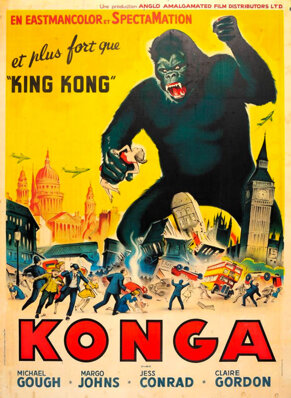
KONGA, JOHN LEMONT, 1961
3/5 ⚫⚫⚫
A cult film reminiscent of youthful viewings in church halls. Konga's costume is remarkable, reminiscent of the hilarious ape from Blake Edwards's Pink Panther.
Enjoy it with popcorn in hand.
la polizia accusa:il servizio segreto uccide, S.Martino, 1975
3/5 ⚫⚫⚫
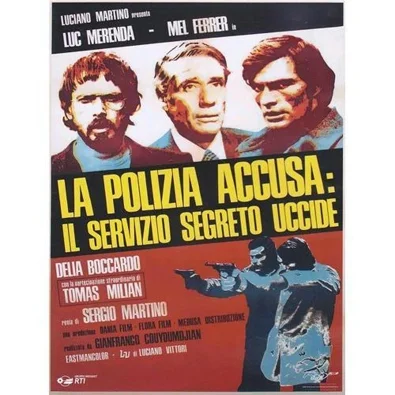
Despite many of the clichés of Italian crime dramas and some below-par and below-believable action scenes, this film deserves its good rating: in "political" years of tension-fueled strategies, fascist resurgences, and coup plots, Martino becomes the best popularizer of politically charged, auteur cinema à la Elio Petri. In the film, not only do the masterminds of those seeking to overthrow the state lurk ever higher up the political spectrum, employing infiltrators to the highest levels; but even the figure of Commissioner Solmi/Luc Merenda is not just the classic, rough, unruly cop, who demands a police force that is, yes, at the service of the citizen, but also of truth and DEMOCRACY… and who will pay for it...
A true heresy in those years kind of cinema .
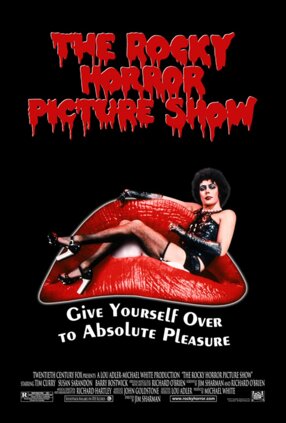
the rocky horror picture show, j.sharman, 1975
4/5 ⚫⚫⚫⚫
This film stands out as a pivotal work that solidified Tim Curry's status as a remarkable actor. It's worth watching again, especially for its numerous nods to classic Hollywood films.
Looking back, the film's impact on contemporary cinema is notable. It set a standard that continues to resonate today. The references to earlier works weave a rich tapestry, connecting the past with modern storytelling. Each viewing reveals layers of meaning and homage that enrich the experience.
Tim Curry’s performance is a highlight, showcasing his versatility and depth. The film not only entertains but also invites viewers to reflect on its cultural references. It serves as a reminder of how classic cinema shapes current narratives.
In summary, this film is more than just a nostalgic journey. It’s an essential piece that bridges generations of film lovers. Its influence is felt in many of today’s movie classics, making it a significant watch for anyone interested in the evolution of film.
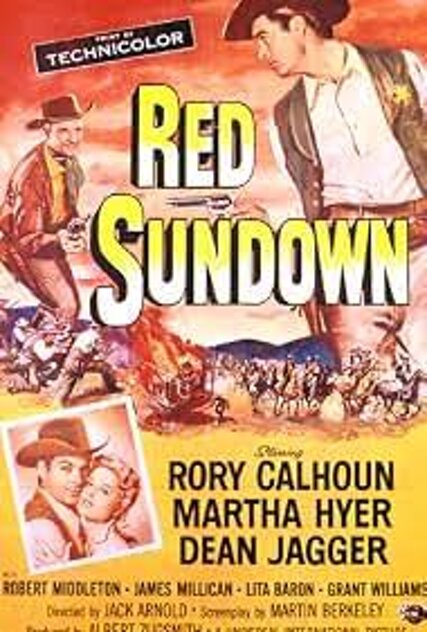
red sundown jack arnold, 1956
3/5 ⚫⚫⚫
A B-movie that rises to classic status does more than entertain; it distills the essence of typical films and sets a standard for others in the genre. Take the spaghetti western, for instance; its roots can be traced back to such films.
The scene where the hero buries himself alive is a standout moment, marking a significant transformation in his character. Then there's the iconic saloon brawl, which paved the way for the comedic elements we see in spaghetti westerns.
This film also captures a strong narrative tension, showcasing a refusal to compromise, reflecting the decline of cinematic McCarthyism. Its impact resonates, influencing countless productions that follow.
sei donne per l'assassino, m.bava, 1964
4/5 ⚫⚫⚫⚫

Pay attention to the date... it will be clearer how seminal this film is for thriller cinema, both Italian and international, the "poor" kind that makes a virtue of necessity and the kind that can afford lavish productions.
So, if we watch it today, it seems more like a trailer for the evolution of the genre - the fashion atelier, mannequins, the counterfeit, the sadism of the killings, the bright colors, barely sketched characters, the music... finally, Bava's reinterpretation and remixing of so much classic cinema, silent or Hitchcock... but, then again, we're only in the early '60s, and this film canonizes the genre.

il conquistatore di corinto, m.costa, 1961
2/5 ⚫⚫
A "Greek" variation of a genre that, between the late 1950s and mid-1960s, invaded global markets from Cinecittà, especially those of the so-called decolonized Third World: strongmen and mythical heroes, but also, as in this case, political plots and unspeakable desires... in short, current affairs.
Mario Costa exploits the limited production through abstraction and visual subtraction; the irruption of the magnetic presence of Gianna Maria Canale, once an absolute diva of the genre, pierces and illuminates her moments in the film.

Renowned for his mastery in Italian cinema, particularly in adventure, crime, and mythology, Freda stands out as a pioneer of horror in Rome. His film The Vampires from 1957 set a new standard. In a mere two weeks, he crafted two remarkable films, showcasing his ability to work swiftly and effectively. Barbara Steele, an iconic figure in Italian Gothic, starred in these projects. Freda’s direction is distinct and meticulous, drawing viewers into a world filled with his signature themes. He explores dark desires, hidden truths, and sinister forces. Each frame pulsates with an intensity that reflects his unique style, blending cruelty and artistry. Our time with Riccardo Freda was extensive, yet it did not cloud our evaluation. His films remain powerful testaments to his vision and talent.
t'amerò sempre, mario camerini, 1933
4/5 ⚫⚫⚫ ⚫

Yes, having recently seen this film by maestro Camerini, I found it extraordinary at many points: the usual story of the poor orphan girl impregnated and abandoned by a socialite becomes a merciless investigation, with moments of comedy and others horrifying, into the fascist Italian society of the time. The film begins with an almost documentary-like opening of the extent to which Regine does for disadvantaged children; the figure of Adriana's mother, the film's heroine, a housewife prostitute, killed by her pimp; the beauty salon where Adriana goes to work, a temple of beauty and female vanity run by a bizarre French hairdresser!
The party to which the shy accountant, secretly in love with Adriana, invites her to declare his love, is constantly interrupted and features moments of horror for everyday life that shine through in the silent stares of the attendees...
In this climate, even the long-awaited happy ending mediated by the figure of a finally welcoming mother, leaves one very uneasy, especially when seen in its historical context.
civil war, alex garland, 2024
1/5 ⚫

Many believe that the most overrated film in the past 25 years is this 2024 release. I just watched it, and its flaws are evident. Marketed as a premonitory and dystopian tale, it ultimately falls flat as a mediocre zombie film. The final scenes, depicting an insurgent attack on the White House, border on cinematic excess. Can we really engage with the journey of a war photojournalist and her companion? It's just another take on the classic "All About Eve." Some argue it reflects the deep issues within today's America. Yet, Ford’s "The Wild Scan" offered more. It not only addressed hatred but also left a glimmer of hope, something we desperately need.

io e caterina, alberto sordi, 1980
2/5 ⚫⚫
Seeing this film today hit me hard. It stands alongside Fellini's City Of Women, both grappling with the weight of political correctness. But beyond that initial shock, I found myself reflecting. Like many works by A. S., this film has its share of clumsy staging. Yet, this very flaw draws it closer to a daring and engaged cinema, reminiscent of directors like Straub and Tarr. The blatant machismo in the plot, especially in the first half, combined with increasingly absurd moments that echo Sordi’s style, veers into the grotesque rather than the humorous. The finale? A chilling sociological horror-fantasy that nods more to Fulci than Argento. This twist transforms the film's entire meaning. Credit goes to the screenwriter, Rodolfo Sonego, who crafted this complex narrative. He is the true mastermind behind Sordi's work.
french dressing, ken russell, 1964
3/5 ⚫⚫⚫

Ken Russell's first film is a cheeky romp that pokes fun at British stuffiness while giving a wink to French mischief. It draws inspiration from the French New Wave and Italian legends like Fellini. This delightful comedy is worth revisiting. It's like finding an old friend who still knows how to make you laugh!

amori di una calda estate, j. A. Bardem, 1965
3/5 ⚫⚫⚫
Among the rare films shown late at night on the private channel Rete 4, there's this unique comedy by maestro Bardem. At times hampered by the need to evade censorship, the film portrays complex, always on edge characters, with a nod to the masters Comencini and Antonioni. Melina Mercouri is beautiful and superbly talented.
PAOLO LUCIANI GOES TO IL CINEMA RITROVATO FESTIVAL

brazil, terry gilliam, 1985
5/5 ⚫⚫⚫ ⚫ ⚫
beautiful, prophetic, visionary, seminal film. Full of tributes to classic cinema, special effects worthy of Melies and a magnificent screening in Piazza Maggiore presented by Gilliam himself: "You are about to see for the first time the 4K version of my third director's cut!" And the show begins...

Il manoscritto trovato a Saragozza , w.has, 1965
4/5 ⚫⚫⚫ ⚫
The film, now restored in 4K, showcases its complex narrative brilliance. This quality is what captivated renowned filmmakers like Bunuel, Lynch, and Scorsese. It's time for a fresh look at this cinematic gem.

close encounters of the third kind, s.spielberg, 1977
4/5 ⚫⚫⚫ ⚫
In Piazza Maggiore, a crowd of 3000 gathered to watch a film, lovingly restored in 65 millimeters, just as Spielberg envisioned. The film's beauty shines through, thanks to its stunning photography, seamless editing, and powerful acting, with Truffaut taking center stage. Yet, despite its message of togetherness, the film's hopeful spirit struggles against the harsh realities of today's world, leaving you with a desperate sense of involutive regression just after the end...
summertime, david lean, 1955
3/5 ⚫⚫⚫
David Lean followed this film with The Bridge on the River Kwai. Hard to picture, right? Initially, the Venice scenery felt like an advertisement. Even worse? The film leaned on old Italian stereotypes. Think the "barefoot urchin" trope. But then, something shifts. Katharine Hepburn's character, a middle-aged single woman, finds herself. She connects with Rossano Brazzi. The film deepens. That's when its cult status makes sense. It brought to mind Clint Eastwood’s 15:17 to Paris. Both films capture Venice’s allure. In Eastwood’s movie, young people are charmed. Here, Hepburn meets two older American tourists. They’re less enchanted. Her own journey, however, mirrors that initial wonder. My advice? Watch this film. Give it a fresh look!


the comedy man, alvin rakoff,1964
3/5 ⚫⚫⚫
Amidst the backdrop of free cinema and the rise of the Angry Young Men, we meet an older, disillusioned theater actor (a magnificent Kenneth More) from modest traveling companies. He ventures to London in search of better opportunities but unexpectedly finds himself entangled in the world of television advertising. This journey unfolds through a blend of personal struggles and the challenges faced by a bohemian artist. The film elegantly fluctuates between drama and comedy, showcasing a distinctly British charm. A viewing is definitely recommended.

il gatto dagli occhi di giada, a.bido, 1977
3/5 ⚫⚫⚫
This cult classic draws heavily from its genre roots, echoing the thrilling style of Dario Argento and the raw intensity of 70s westerns. While budget constraints are evident, the direction shines through. It effectively uses close-ups of the main characters, evoking a profound sense of guilt reminiscent of Agatha Christie’s works. This film definitely deserves a fresh look!

underwater, john sturges, 1955
2/5 ⚫⚫
A beautiful adventure film, which, with the excuse of underwater filming, offers elements of post-war redemption. A beautiful ending of absolute sharing. The skill and modern, statuesque beauty of Jane Russell should be considered.

7 uomini d'oro, marco vicario, 1965
3/5 ⚫⚫⚫
The film features a captivating soundtrack by Trovajoli that you have to hear to believe. Recently restored, it shines remarkably well. Vicario, a reclusive author known for his shyness, presents a pop film that stands out in its category. The cast brings the flawless script to life with exceptional performances. This film invites a fresh viewing and has influenced countless TV series in the genre, along with inspiring the animated series Lupin III.

the substance, Coralie Fargeat, 2024
2/5 ⚫⚫
The obsession with aesthetics and photography partially compensates for the lack of story. Voyeuristic and crafty (too many showers and butts in close-up), the film also develops through a series of tributes to the great classics of the genre, but it turns out to be caricatural and moralistic. Definitely overrated.

night song, John Cromwell, 1948
3/5 ⚫⚫⚫
The music directed by Rubinstein adds a nice touch to the film, hence my rating for the film. The production is straightforward, a classic RKO style. However, the story is a typical melodrama featuring a heroine who pretends to be blind for the sake of a blind pianist (!). It's a bit of a letdown, though. It doesn't fully deliver, missing out on the over-the-top ending we all secretly crave.

the holdovers, Alexander Payne, 2023
4/5 ⚫⚫⚫ ⚫
This film showcases Payne as a standout American director of his generation, skillfully channeling the essence of Italian comedy. He strikes a balance reminiscent of De Sica, Castellani, Comencini, Risi, and Monicelli, particularly in their gentler works. Set against the backdrop of the late sixties, the film adeptly portrays the generational clash among its characters. Giamatti delivers a performance worthy of an Oscar.
eraserhead, david lynch, 1977
4/5 ⚫⚫⚫ ⚫

In 1977, I ran the Filmclub Officina in Rome. It had only been open for a year. David Lynch’s name and his first feature film were already buzzing among film enthusiasts. An independent distributor in Bologna, friends of ours, had secured the rights to the film. I went to the train station myself to pick up the 35mm reels. It was the only copy making its way through Italian film clubs at the time. We usually screened multiple films a day. But on that occasion we decided to do something different. We gave Eraserhead a full 15-day run. Just that one film. Looking back, I like to think we played a small part in introducing Lynch to more people. He became a kind of “friend of cinema” for us. Someone whose work stayed with us long after that.
wallace & gromit vengeance most fowl, n.park, 2024
4/5 ⚫⚫⚫ ⚫

This film nails it on animation, script, and character design. It targets a younger crowd but has plenty of nods to classic films that adults will recognize too. Feathers McGraw, the penguin, makes a fantastic return, he has a lot in common with those classic movie bad guys we all love to hate and It's a joy to recognize them all in his actions. The introduction of the gnomes is both eerie and charming, perfectly executed. And don't miss the little touches! From the furniture choices to Gromit's cozy evening readings, every detail adds to the overall enjoyment. This film is a real treat!

diamanti, Ferzan Özpetek , 2024
2/5 ○○
This film features an all-female cast, many of whom have previously collaborated with the director. It includes a mix of autobiographical elements and famous movie quotes. However, the overall result leans towards melodrama without effectively engaging the audience. There are musical elements sprinkled throughout, but many storylines remain unresolved. This leaves viewers with a sense of anticipation for a possible upcoming TV series.
holiday affair, don hartman, 1949
3/5 ⚫⚫⚫

This film appeals strongly to fans of Mitchum. His role takes a lighthearted post-war Christmas comedy and infuses it with dramatic elements, revealing moments of unexpected harshness. The story centers on a war widow caught in a struggle between logic and feelings. The mix of drama and melodrama is layered beneath a gentle snowfall, adding depth to the plot. Overall, this film captures the complexity of human emotions against the backdrop of a seemingly cheerful holiday season. It invites viewers to reflect on the challenges faced by those left behind after war.

audrey rose, robert wise, 1977
1/5 ⚫
I just watched this film again, almost 50 years after it came out, and honestly, I was let down. The book it’s based on is a prime example of horror, the subgenre featuring evil children. But the movie? It misses the mark. It lacks emotion and gets interrupted by an over-the-top, whiny little girl who just isn’t believable. And let’s talk about Anthony Hopkins playing a vegan. That’s hard to swallow.

i lancieri neri, Giacomo Gentilomo, 1962
2/5 ○○
The director, who has been creating films since the 1930s, leaves a lasting mark with this movie.
It tells a complicated tale of family conflicts set against the backdrop of vast steppes and grand castles, highlighting the unique culture of the Kyrgyz people.
The visuals and costumes in this film feel like a precursor to the style seen in the 90s Star Trek series.
This is a film worth seeking out. You'll find it rewarding to watch.
ride vaquero, john farrow, 1953
3/5 ⚫⚫⚫

This western film has it all: vast landscapes, roaming herds, galloping horses, and clashes with Mexican bandits resisting the progress of post-Civil War America. While it may not be from great directors like Ford, Mann, or Ray, it laid the groundwork for spaghetti westerns. The relationship between Taylor, always sharp in his black attire with studs, and Quinn, the scruffy, heavy-drinking bandit with a strong Catholic background, adds depth to the story. Their dynamic hints at something deeper, some kind of love, reminiscent of classic themes found in Howard Hawks' work. Then, Ava Gardner makes her entrance, throwing everything into chaos. A fun detail: there’s a scene where Quinn is in his hideout, carving a horse's head from wood. This hobby becomes a lifelong passion for him.

l'angelo delle alpi, c.campo galliani, 1957
3/5 ○○○
The story, based on the book by Carolina Invernizzi, is a classic melodrama, with Arturo Galea (I vitelloni by Fellini) handling the cinematography and Fusco (one of Visconti's favourites) providing the soundtrack. It follows the journey of a foundling who faces relentless challenges and misfortunes. The plot is filled with unexpected turns, leading to a surprising conclusion in a courtroom setting. This film surely deserves to be seen and appreciated anew.

the outfit, Graham Moore, 2022
3/5 ⚫⚫⚫
Set in a prestigious tailor shop in 1950s Chicago, the story unfolds dramatically. The atmosphere is thick with references to classic literature and film, which adds to the ongoing tension. Mark Rylance delivers an outstanding performance. His portrayal pulls you in, making it an experience to savor, much like enjoying a good glass of whiskey. It’s a show that demands attention. Every moment counts. Each reference hits home. You don’t just watch; you feel. You’re part of the action. It's a stylish piece that keeps you engaged from start to finish.

the pumpkin eater, j.clayton, 1964
3/5 ⚫⚫⚫
The film has beautiful photography and wonderful cast (Bancroft, Finch, Mason) who give their all to humanize a drama of marriage incommunicability.The character played by Bancroft also recalls by contrast the mother Katina Paxinou of Rocco And His Brothers by Visconti; her morbid attachment to her children dictates the pace of a personal growth in tune with the changing customs of those years. The screenplay is based on a subject that Pinter originally wrote for the theater. Directors like Antonioni and Bergman have certainly influenced Clayton's stylistic choices, but, from this point of view, the film does not hold up to comparison. Too British and moralistic, but excellently made.
what ever happened to baby jane? r.aldrich, 1962
4/5 ○○○○

I saw this film for the first time in 1977. Re-watched in 2024 it gave me the same wonder as the first time. It lived up to all expectations and indeed, I appreciated the wonderful direction and photography even more. Speechless for the sharpness and subtle irony of the two great leading ladies, who compensate for the excessive baroqueness of the film. In my film club card I had the phrase printed: "But You are Blanche. You are in that chair!"
only two can play, s.gilliat, 1961
3/5 ⚫⚫⚫

The film resembles an Italian comedy (Pietrangeli, Loy) about a librarian with a "sexual obsession", a metaphor for his unsatisfied life. When the opportunity arises several times, a series of hitches, typically Sellers-like, instead reawaken his self-esteem and a final twist seems to put things back in order, or almost...
Very funny and modern in the portrayal of all the characters.

bianca, nanni moretti, 1984
4/5 ⚫⚫⚫ ⚫
Considered the most iconic film by Moretti, in the wake of his first three films it was welcomed as a black comedy, full of the most important punch-lines of his cinema. But, to be true, it is a film about the desperation and inability to live of a 30 years old intellectual, a mathematics professor who cannot make sense of human relationships and feelings, as well as the ideals of just 10 (ten!) years before (from the 70s to the 80s). Definitely a cult.

too late for tears, Byron Haskin, 1949
3/5 ○○○
This film remains one of the best examples of noir with a femme fatale as the protagonist. Ruthless and brutal, Scott sculpts a character that transcends the film itself. The photography and dryness of the plot are impeccable.
Pink String and Sealing Wax, r.hamer, 1946
3/5 ⚫⚫⚫

The film is a general rehearsal for a genre of which Hamer becomes a master: noir with glimpses of humor. Here, the protagonists, sons of a despot and upright father, find their way through a thousand subterfuges. The villain, a spectacular Googie Withers, gives life to the best dialogues of the film. A little gem waiting to be discovered.

Stranger on the third floor, b. ingster, 1940
4/5 ○○○○
Noir Jewel. Clear references to Hitchcock, Irish and Welleswith. Peter Lorre, like no other actor, once again plays a villain who masterfully becomes the protagonist of the film. A plot that develops in Chinese boxes, nightmares and wonderful photography, make this film a small masterpiece of the genre.

alien romulus, f.alvarez, 2024
4/5 ⚫⚫⚫ ⚫
Film that restores the saga's original strength. A triumph of homages to classic sci-fi, first and foremost the synth, Andy, who brings to mind the unattainable Data from Star Trek. The representation of space is masterful, as are the slightly industrial environments in which the entire film takes place. Also, the audience in Rome loved, with lots of laughs, finding the Capitoline she-wolf on the portal of the space base. Maybe a funny touch by Ridley Scott who is also the producer of the film. Waiting for Alien Remus, this film is a new classic worth seeing.

follow me quietly, r.fleischer, 1949
4/5 ⚫⚫⚫ ⚫
In the duration of an hour this film develops many of the main themes of this genre and gives us surprising scenes that have become cornerstones of noirs of all time. A film worth watching in one sitting.

la famiglia passaguai, aldo fabrizi, 1951
3/5 ⚫⚫⚫
This is a 1951 comedy film directed by Aldo Fabrizi. It is based on the novella "La Cabina 124" by Anton Germano Rossi. It is the first chapter of the Passaguai trilogy with the films The Passaguai family makes a fortune of 1952 and Daddy becomes a mother of 1952. Fabrizi proves once again to be an exceptional performer, in an irresistibly comic film that perfectly describes the vicissitudes of an Italian family grappling with the imminent economic boom and the
dreaded holidays.
PAOLO GOES TO...IL CINEMA RITROVATO 2024

THE LAVENDER HILL MOB, C. CRICHTON, 1951
3/5 ○○○
Very funny and very English in the plot about the bank heist conceived by poor souls unsuspected and unlikely as criminals. In some moments it seems to anticipate Big Deal on Madonna Street , in many others, Keaton-style chases or situations of light dark humour.

tovarich, anatole litvak, 1937
3/5 ⚫⚫⚫
Beautiful and funny comedy about White Russian exiles, and what exiles Boyer and Colbert! Both aristocrats, she is even dealing with survival as a waitress among a rich and bizarre family of a Parisian banker. It could all work, but it's missing the touch of Lubitsch, of Wilder... and you can feel it.

jaws, steven spielberg, 1975
4/5 ○○○○
Good 35 mm copy; the fun and even the fear are still the original ones, perhaps confirming one of the interpretations that have always accompanied this film: the b movie that put an end to b movies... until the megalodons arrived on Netflix...

deliverance, john boorman, 1972
4/5 ⚫⚫⚫ ⚫
A well restored 35 mm copy.
Watched again since its release, the film is today even more powerful in its almost Pasolini-esque description of destructive progress and human types that seem like a snapshot of today's America.
MOVIES ON SUNDAY (CLASSICS ON THE BIG SCREEN)

anouk aimèe (1932-2024)
A beautiful and very elegant actress, but above all of rare skill. Loved by all the directors she worked with and especially by Fellini who once said : "Anukkina, my Cipressina, in your always distant gaze, I see the universe and its mysteries."

napoli piange e ride, flavio calzavara, 1954
3/5 ⚫⚫⚫
This second-class melodrama, filmed with very little means in the Pisorno studios, almost involuntarily transforms into a musical thanks to the presence of two famous Italian singers, Luciano Tajoli and Jula De Palma, who reinterpret the classic Neapolitan repertoire with originality. Worth seeing.

totò cerca moglie, c.l. bragaglia, 1950
4/5 ○○○○
In this film an irresistible Totò gives the best of his experience of body mimicry and theater. Witty jokes and a context, that of the artists of Via Margutta in Rome, make the film even more precious. The director knows classic cinema and Buster Keaton, honored with a daring ending. To lift a heavy day.

libeled lady, jack conway, 1936
3/5 ⚫⚫⚫
The Powell-Loy, Harlow-Tracy couples contribute to making this film a classic of elegant Hollywood comedy. Luxury and journalism are the scenarios in which the accelerating pace takes hold. It lacks a bit of the malice of Sturges or Hawks, but the result is still beautiful. Worth seeing!

still of the night, robert benton, 1982
3/5 ○○○
A film that is a continuous tribute to Hitchcock and which is saved for perfect photography and taste. Unfortunately, to paraphrase the title, it remains still and flat, also due to the two protagonists, Streep and Scheider, who are not so credible in their roles. Why watch it? Because compared to similar contemporary films, it wins hands down.

MAGGIE MOORE(S), J.SLATTERY, 2023
3/5 ⚫⚫⚫
Excellent example of an independent film, with many brilliant actors (extraordinary Tina Fey) and who "infest" the most successful TV series. Perfect pace and dark humor, for a crime comedy to watch and enjoy.

woman of the year, george stevens, 1942
5/5 ○○○○○
The screenwriter Ring Lardner Jr., one of Hollywood's 10, manages to write a brilliant and modern comedy, where, in addition to the background of the imminent war, the film discusses feminism, pacifism, with a pace that does not make you miss the classics of Buster Keaton and Laurel & Hardy. To see and see again.
american fiction, C.Jefferson, 2023
3/5 ⚫⚫⚫

As a cinema enthusiast and a European, the film seems less sensational to me than what was said and written. the screenplay, although award-winning, pales in comparison with the best bittersweet comedies by Italian masters such as Risi, Scola, Scarpelli. Extraordinary actors make the most of it.

poor things, Y.Lanthimos, 2023
2/5 ○○
What if Frankenstein becomes the protagonist of a soap opera, discovers free sex and embodies all the principles of gender emancipation of today? We get a film like Poor Things. Emma Stone deserves the golden statuette, but the context is too far-fetched and doesn't hold a candle to the masterpieces of the past. An "already seen" film, for a young audience with no memory.

Riding Shotgun, a. de toth, 1954
4/5 ⚫⚫⚫ ⚫
The film made many film people and fans rediscover its director and, although classified as a second-line western, it anticipates numerous TV series in its creation and plot. However, the themes of guilt, revenge and intolerance prevail. The story is developed in a first-person narrative and turns out to be original, despite all the clichés of the genre.

pia de' tolomei, esodo pratelli, 1941
3/5 ○○○
This film is a classic example of costume drama, a film that, despite being made in 1941 (Italy is still under the fascist regime) has innovative qualities in the photography of the master Gallea and in the screenplay. It is definitively modern and anticipates some of the themes developed in the costume sagas of today.

lady in the jam, g.la cava, 1942
4/5 ⚫⚫⚫ ⚫
This comedy is very modern, centered on a young and irresponsible billionaire who ends up in the arms of the therapist who is supposed to cure her. Intense and very enjoyable pace for a film set in America which is about to enter war. Worth seeing to understand the most contemporary comedies (see the Cohen brothers).

giulietta degli spiriti, f.fellini, 1965
5/5 ○○○○○
Film that consecrates Fellini's unconventional love for his muses. A spectacular Sandra Milo compensates for herself and Masina, antagonists in real life, with an ironic and very talented interpretation. Beautiful and with an unforgettable smile, Sandra Milo ranks among the greatest Italian actresses of all time.

mirage, Edward Dmytryk,1965
3/5 ⚫⚫⚫
Hitchcock-style film, even for the cast. But the fun of the film, in its mockery of Bond, harks back to the Hitchcock production of the 1930s. Wonderful photography,
rancho notorious, fritz lang, 1952
4/5 ○○○○

In this wonderful film there is something more than the familiar Langhian themes of violence, revenge, good and evil, justice, the femme fatale, the efficient outlaw organization, the brilliant mind that guides it. Psychological motivation and adventure come together giving a sense of harmony and tragedy. By accepting the age of his interpreter, Lang shows the two myths that interest him, that of the western and his own. This is why there is an unknown emotion, a sort of derisive and tragic complicity with the women in the film, who suddenly resemble the women of life and ourselves. Not to be missed.
The ghost of sierra de cobre, j.stefano, 1964
3/5 ⚫⚫⚫

Terrified of being buried alive by mistake, a woman puts a phone in her crypt to be able to call home if she needs help. She dies and nothing happens. One day, the phone suddenly rings. Paranormal investigator Nelson Orion (Martin Landau) is brought in. With legendary Judith Anderson and Diane Baker, this film (initially made for TV) entertains with suspense, but also with a certain naivety in its staging choices. The courage of the special effects and the impeccable cinematography are to be appreciated.

the loneliness of the..., t.richardson, 1962
4/5 ○○○○
In Italy this film was welcomed as a manifesto of rebellion against the system and political awareness. Watching it again, the film shows more British specificities than universal ones, but my opinion remains absolutely positive. I also recommend it to feel young forever, at least for an hour and a half...
what's up doc? p.bogdanovich, 1972
4/5 ⚫⚫⚫ ⚫

What’s Up, Doc? joyously recaptures the bubbly style of 1930s screwball comedies and firmly establishes Barbra Streisand and Ryan O’Neal as a romantic duo uniquely endearing in screen history. Despite the many quotes from Jerry Lewis, Marx Brothers and Hawks' cinema, it's not a very nostalgic film. Included are a daffy luggage mixup plot, dippy dialogue exchanges, a marvelous example of the art of hotel-room demolition and one of the funniest chase sequences ever, all over San Francisco. Dexterously written with a surefooted sense of the ridiculous by Buck Henry, David Newman and Robert Benton, directed by Peter Bogdanovich with giddy affection and cast with awesomely hilarious players (including film-debuting Madeline Kahn), What’s Up, Doc? is no idle question. Among comedy movies, it’s the top.

bananas, woody allen, 1971
3/5 ○○○
This film, still very funny, is full of quotes and homages to the greats of comedy. At times, it reaches the strength of the best silent movies of the genre. Lightning-quick jokes, characters at the limits of credibility, but which recall dramatically and prophetically to our present. To be looked at with hindsight.

hell's heroes, w.wyler, 1929
5/5 ⚫⚫⚫ ⚫ ⚫
This is the best film version of the Three Godfathers tale by Peter B. Kyne. Wyler will also make a sound version of this movie, but the silent one is very powerful. Expressionist symbols abound and beautiful cinematography accompanies this wonderful story of redemption. A must see.

merry go round, E. v. Stroheim, Rupert Julian, 1923
5/5 ○○○○○
A masterpiece seen at the forty-second edition of the Pordenone Giornate del Cinema Muto. Although removed from Stroheim's direction after a few weeks of work, the film was positively influenced by his golden touch. Modern and beautiful, a source of inspiration for other masterpieces of the genre.
oppenheimer, c.nolan, 2023
5/5 ⚫⚫⚫ ⚫ ⚫

Cinema cinema, wonderful sound and photography, in short, Nolan has accustomed us to enjoying the big screen again, literally. If I have to find a flaw in this film which, in all likelihood, will win many Oscars, it is that it could have lasted thirty minutes less and shake off its Biopic allure. Still worth seeing.

REPULSION, r.polanski, 1965
4/5 ○○○○
Polanski makes a hallucinatory journey into the psychic sphere of an enchanting and disturbed woman. Almost sixty years after its release, the film still raises the same doubts and questions.

la terra trema, l.visconti, 1948
5/5 ⚫⚫⚫ ⚫ ⚫
This masterpiece by Luchino Visconti is a fundamental work in the film production of Italian neorealism which, in the years immediately following the Liberation, interpreted the Italian social reality, a reality made up of misery but also of hope for emancipation and progress. The photography is beautiful, making the film contemporary, powerful and effective.
PAOLO LUCIANI'S FILMS FOR FUN
BECAUSE CINEMA IS, ABOVE ALL, ENTERTAINMENT !

the atomic submarine, s. c. bennet, 1959
4/5 ⚫⚫⚫ ⚫
I immediately explain that the 4 stars are given by paradox. An absolutely flat film, with laughable special effects and extenuating slowness. Having said that, the soundtrack and the essentiality of the photography, as well as the presence of one of the most absurd alien creatures ever seen on screen, make this film a must-see cult. And, if Oppenheimer has disappointed your expectations, this film is definitely for you.

Please murder me!, p.godfrey, 1956
4/5 ⚫⚫⚫ ⚫
The film sees Burr who, with this performance of the blameless lawyer, secures the role of Perry Mason for the series that will be launched only a year later. Unsettling Angela Lansbury in the part of the ruthless dark lady, very far from Angela Fletcher and Disney's successes. Absolutely to see!

The Day the Earth Caught Fire, v.guest, 1961
4/5 ⚫⚫⚫ ⚫
This is a British science fiction disaster film, it is one of the classic apocalyptic films of its era and it is really prophetic. Besides the very good acting of the main characters, the film reveals the dynamics between information ethics and power, narrating a journalistic world that unfortunately no longer exists. To be seen with a spirit of resignation.

the plot against harry, m.roemer, 1971
5/5 ⚫⚫⚫ ⚫ ⚫
For me this film was the best surprise of this year's Cinema Ritrovato festival in Bologna. It is the tragicomic story of a small Jewish gangster masterfully directed and directors such as Altman, Scorsese and, most of all, Allen breathe. It is an independent film with a troubled history that finally finds the audience and the attention it deserves. To see and see again.
The chase, Arthur Ripley, 1946
4/5 ⚫⚫⚫ ⚫

This film is one of the best adaptations of Cornell Woolrich's short stories. The first part of the film is classically noir, while the second half turns out to be a nightmare that travels between dream and reality. The actors are all wonderful and credible. It should be noted that this will be Morgan's last Hollywood movie. Enjoy it!

la femme aux bottes rouges, J.Luis Buñuel, 1974
2/5 ⚫⚫
A substantially injudgable film. Disappointing due to the high expectations of reviewing the cast of Tristana and its screenwriter Jean-Claude Carriere. The film also reveals a sidereal distance between Bunuel father and son...Not to be missed, however, for some surreal and comical moments that make it a cult in spite of itself.

strange illusion, Edgar G. Ulmer, 1945
4/5 ⚫⚫⚫ ⚫
This dreamlike and romantic noir is somewhere between Shakespeare and Hitchcock and, although not at the level of other films such as Detour, it is a very successful auteur test. I would also like to point out wonderful cinematography by Eugen Schüfftan, although uncredited.

where the sidewalk ends, o.preminger, 1950
4/5 ⚫⚫⚫ ⚫
This beautiful noir is placed somewhere among Lang, Hitchcock and Matarazzo; the will of redemption from the sins of the fathers becomes the main theme. The film remains fresh and enjoyable, despite the plot and cast refer to classic genre and era.

the big combo, Joseph H. Lewis, 1955
5/5 ⚫⚫⚫ ⚫ ⚫
A noir film by definition, which I have seen again after more than thirty years and I can confirm that it remains one of the most beautiful films of its kind, endowed with an unexpected freshness. Not to be missed

Tetris, Jon S. Baird, 2023
3/5 ⚫⚫⚫
Despite being one of the few in the world who has never played Tetris, I found the film very entertaining, a mix of comedy, spy story and propaganda. In the wake of 1,2,3 by Billy Wilder and with graphics that refer directly to the video game.
THE BIG NIGHT, J.LOSEY, 1951
4/5 ⚫⚫⚫ ⚫

Based on Ellin's 1948 novel Dreadful Summit, this film combines the noir and black comedy genres with hints of family tragedy in a psychoanalytic key. This is Losey's last American film before his English exile, in which the theme of racism(even unaware in his characters) of the society of the time, emerges clearly.

boston strangler, m.ruskin, 2023
1/5 ⚫
This is a 2023 American historicalcrime drama film based on the true story of the Boston Strangler, who in the 1960s killed 13 women in Boston. Unfortunately, the actors and the very dull cinematography relegate it to a slow TV drama, without twists and turns and without conviction. In this film, the sixties, the very ones in which JFK dies (!), remain flat and faded, like the dominant colors foolishly chosen by the director. A missed opportunity.

easy rider, d.hopper, 1969
4/5 ⚫⚫⚫ ⚫
Even after more than half a century the film maintains its freshness intact, for the dramatically ever-current themes and with a daring editing and long, blessed pauses for reflection, beautiful musical counterpoints, which make the film a milestone of its genre.

INTO THE NIGHT, J.LANDIS, 1985
4/5 ⚫⚫⚫ ⚫
important and bizarre cast, B.B.KIng's soundtrack, moments of meta cinema and the right balance between comedy, action and brutality. The film is above all a nice remake of classic American comedies, like Hawks and Sturges', even approaching Hitchcock's North By North West.
halloween ends, D.Gordon Green, 2022
4/5 ⚫⚫⚫ ⚫

Mike Meyers returns (when did he ever leave???) and this time he has a follower... who will die in the most obvious way. Comparable to the first chapter of the series, full of brilliant quotes, this film concludes the Halloween saga with an ending that leaves no way out and that betrays a healthy, amused and due exasperation of the authors.

les sultans, Jean Delannoy,1966
3/5 ⚫⚫⚫
A film that clearly traces the difference between the cinema of the old and new continent. A messed up plot that fully recovers for the freshness and interpretative strength of the protagonists. To be enjoyed without prejudice.

american graffiti, george lucas, 1973
4/5 ⚫⚫⚫ ⚫
A film that I am seeing again exactly after 50 years and which, despite the passage of time, remains fresh and absolutely innovative. I can say that today, without falling into the easy trap of nostalgia, for me it is an absolute avant-garde film.

all about eve, Joseph L. Mankiewicz, 1950
5/5 ⚫⚫⚫ ⚫ ⚫
What can I say about this film if not to see it at least once a year to enjoy magnificent actors and masterful directing class.

Cult film that harks back to Frank Capra's atmospheres and slapstick classics with two actors who could not be more complementary than that. Director and actors make us laugh with elegance and tenderness. A new classic.

special correspondents, ricky gervais, 2016
4/5 ⚫⚫⚫ ⚫
The film is extremely entertaining and ironically unmasks some dynamics of contemporary journalism. Gervais and Bana are an odd couple that works great. Small curiosity, the film literally quotes a famous gag by Vittorio Gassman in Il Mattatore.

The Super , Rod Daniel, 1991
3/5 ⚫⚫⚫
A very funny, cruel and not politically correct film. An extraordinary Joe Pesci and a memorable Vincent Gardenia contribute strongly to making it the ideal film for a carefree evening.

THE TERRORNAUTS, MONTGOMERY TULLY, 1967
2/5 ⚫⚫
The film involves two of my favorite science fiction authors, John Brunner and Murray Leinster; the the result on the big screen, however, is inferior to the novel. The imaginative poverty of the special effects (we are dealing with a subspecies of Daleks...) makes it a cult film. For amateurs.

paolo luciani's film of the week
Devil Girl From Mars, David MacDonald, 1954
2/5 ⚫⚫
A British film that has become a cult for the absolutely sadomasochistic Martian protagonist and for the scene that is worth the whole film, the appearance of the alien robot. One of the most successful and comical creations ever seen on the big screen. Unmissable.
PAOLO'S FILM OF THE WEEK

handsome, jeff garlin, 2017
3/5 ⚫⚫⚫
A very pleasant surprise, a film that is less bizarre than it is generally considered; it reminds me of a nice variation of the classic detective story with references to Altman and the Farrelly brothers and the main protagonist stands between sharp irony and melancholy, playing the role of a sort of unprecedented Marlowe.

IL GATTO, L.COMENCINI, 1977
3/5 ⚫⚫⚫
A first viewing for me... of a film that, at the time had been accused of too much nonchalance; but under the guise of a bizarre black comedy lies the profound disenchantment that the two protagonists of the Italian cinema comedy, Comencini and Sonego, the screenwriter, feel in the face of the chaotic and violent Italian political situation of the seventies.
Cage of Gold, Basil Dearden, 1950
4/5 ⚫⚫⚫⚫
David Farrar and Jean Simmons find themselves on screen once again in a film far ahead of its time; a villain and a tragic heroine who in Italy would have been masterfully directed by Raffaello Matarazzo, the king of melodrama on film. An irresistible existentialist London should be underlined without reserve.

CTRocks© All rights reserved